
Record ABEMA Videos: 3 Options for PC and Mobile
Table of Contents
Trying to record ABEMA TV videos from the United States can stop before recording begins: ABEMA in the USA may be regionally unavailable, while protected playback can turn an ABEMA screen recording into a black screen. The practical choice is to compare official offline viewing, device capture, and a desktop local-file workflow.
I first check access, account status, and title eligibility. That order saves more time than changing recorder settings for a video that the device cannot play in the first place. ABEMA, formerly AbemaTV, is the official service name used throughout this guide.
Similar protected-playback behavior can affect attempts to screen record Hulu or screen record Netflix, but each platform applies its own access and offline rules.
ABEMA Access Comes Before Recording
Before you record ABEMA TV videos, confirm that the service, account, and selected title are available on your current connection. A recording app cannot fix regional unavailability or a title that will not play.
What US Viewers May Encounter
ABEMA in the USA may present regional availability limits before any saving method can start. If the page or video does not load, changing screen-recording settings is the wrong first move; confirm access and title eligibility instead.
In my workflow on a Windows 11 desktop using the current ABEMA web service, a title that could not reach normal playback also could not proceed to analysis. The observable result was an access-stage failure, not a recording-stage failure.
Use ABEMA as the Official Name
ABEMA is the current official name. Older searches may still use “AbemaTV,” but ABEMA TV videos, account screens, and help material should be identified with the official branding to avoid confusion.
Three ABEMA Saving Methods Compared
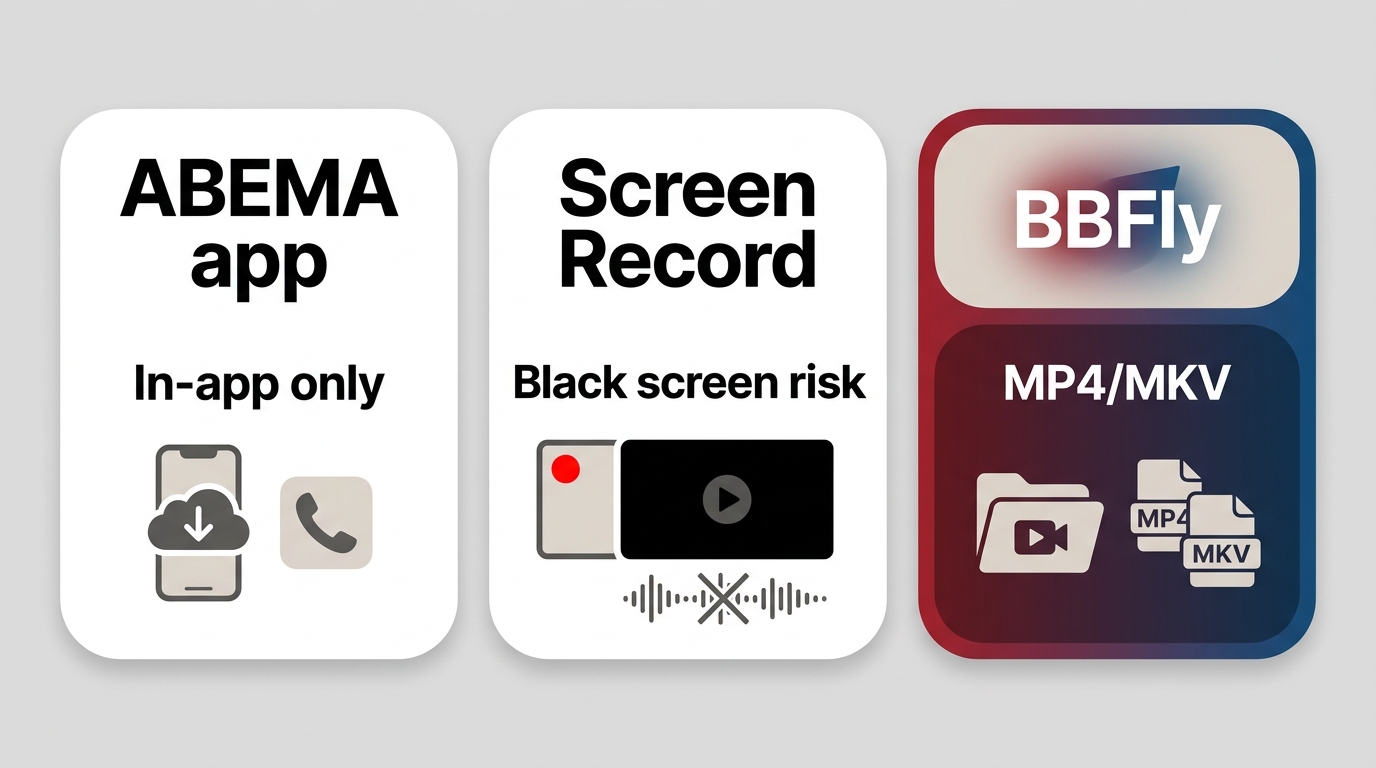
An ABEMA offline download, an ABEMA screen recording, and an ABEMA desktop downloader serve different needs. The official feature keeps viewing inside the supported app, capture depends on protected playback, and a desktop workflow creates a standard local file when the title is authorized and accessible.
| Method | Supported device context | Where playback happens | Output type | Black-screen risk | Subscription or title dependence | Best fit | Key limitation |
|---|---|---|---|---|---|---|---|
| ABEMA official offline download | Eligible supported mobile app | Inside ABEMA | In-app offline item | Low during normal in-app viewing | Depends on account, region, and title eligibility | Convenient mobile viewing within the official app | Not a desktop local file |
| Built-in screen recording | Phone, tablet, or computer capture tools | Captured recording, if usable | Screen-capture file | High when protected playback blocks video capture | The video must play and permit usable capture | Unprotected clips or on-screen material that records normally | May produce a black screen and can lose playback quality |
| BBFly desktop local-file workflow | Windows or Mac desktop | Compatible personal player or device | MP4 or MKV local file | Not the same capture path as built-in recording | Requires authorized access to an available title | Desktop users who need a manageable local copy | Not suitable when regional access or title analysis fails |
My judgment is straightforward: use ABEMA's official feature for eligible mobile viewing, expect protected playback to defeat some screen capture, and consider a desktop workflow for authorized content where platform terms and applicable law permit it. Readers focused specifically on how to download ABEMA TV videos can treat that as a separate task from choosing a recording method.
ABEMA's Official Offline Feature
ABEMA's official offline feature is the cleanest option when the title and device are eligible. The content stays within the supported ABEMA environment rather than becoming a standard desktop file.
Built-In Screen Recording
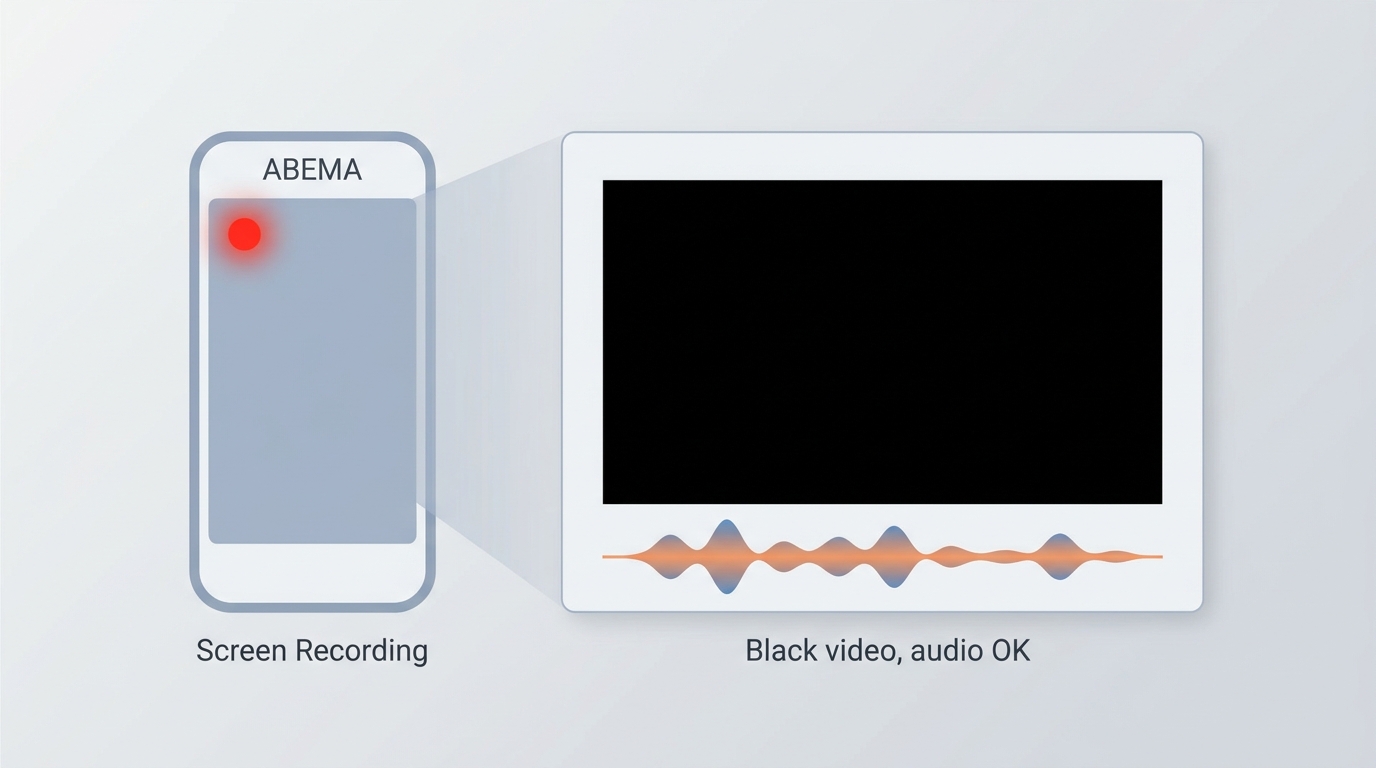
Built-in ABEMA screen recording is easy to try, but protected playback may return audio with a black video area. The same symptom can affect attempts to record Amazon Prime Video or screen record Disney Plus, although each service behaves differently.
On an iPhone running iOS 18, starting Screen Recording during protected playback produced an unusable black-screen result in the captured video, which clearly separated the capture problem from account access.
ABEMA mobile recording therefore makes sense only when the video records normally and the use is permitted. It is not a dependable answer for protected titles.
A Desktop Local-File Workflow
An ABEMA desktop downloader is a separate path for users who want a local file instead of app-bound offline viewing. It still depends on a working account, regional access, title availability, and current platform behavior.
BBFly Fits a Desktop Workflow
BBFly AbemaTV Downloader fits readers who can access an authorized title and want a Windows or Mac local-file workflow. It is one option within the three-method decision, not a cure for regional blocks or unavailable videos.
The product page for BBFly AbemaTV Downloader provides the current installer and service details. For content you're authorized to access, where permitted by platform terms and applicable law, the app can save available ABEMA videos as MP4 or MKV at up to 1080p, with selectable audio tracks, subtitles, batch queues, episode tracking, and metadata support.
Compatibility and Output at a Glance
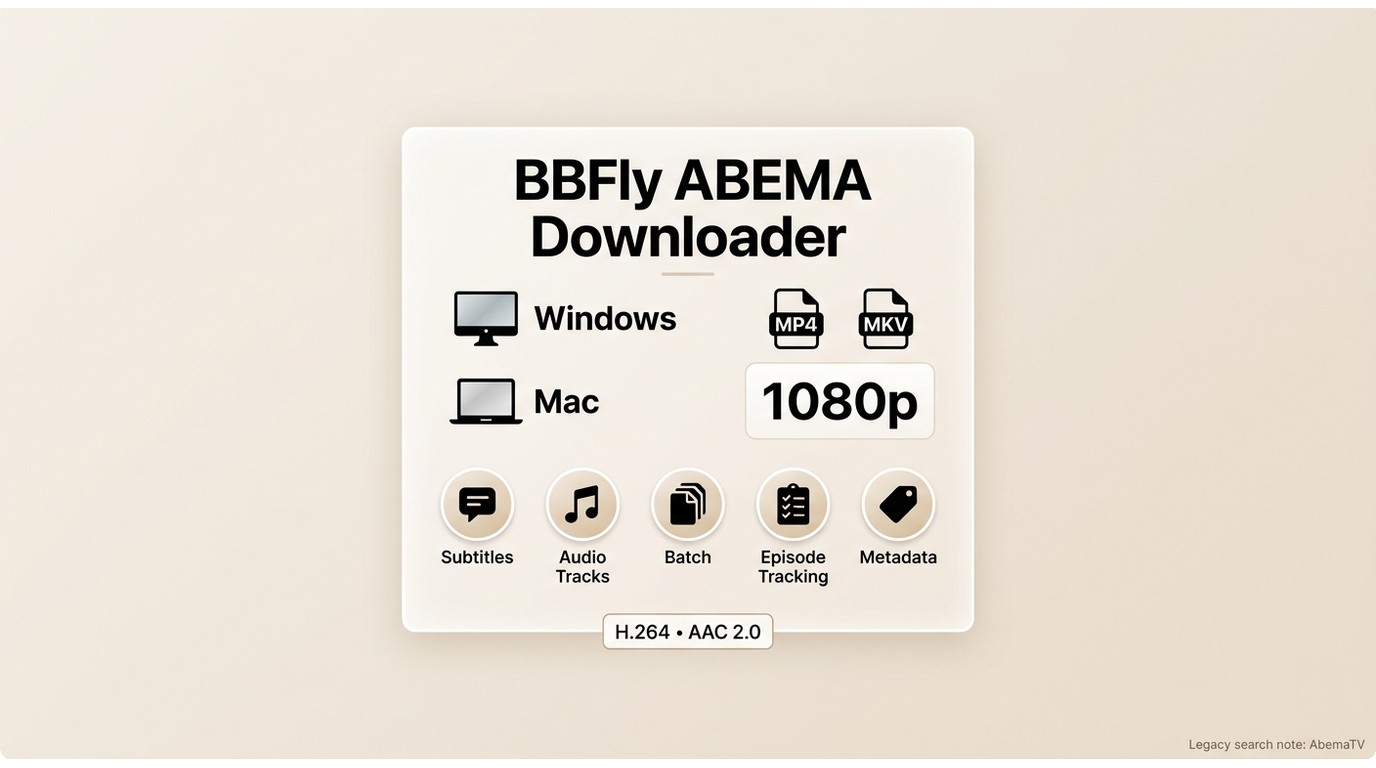
- Systems: Windows and Mac.
- Verified maximum output: up to 1080p with H.264 video and AAC 2.0 audio.
- File formats: MP4 or MKV.
- Workflow features: selectable audio, subtitles, batch downloads, episode tracking, and metadata writing.
- Trial: 30 days, with three complete titles per streaming service during the trial period.

The practical advantage is file control without relying on real-time screen capture. I would still test one supported title first; a verified specification does not mean that regional access or every title will remain unchanged after a platform update.
Who It Suits and Who It Does Not
Best for: Windows or Mac users who already have authorized ABEMA access and prefer a standard local file for personal offline viewing.
Not ideal for: mobile-only users, readers who cannot access ABEMA in their region, or anyone expecting an unavailable title to become accessible through the software.
Record ABEMA Videos with BBFly
Despite the recording wording, this section describes a desktop saving workflow rather than real-time screen capture. Use the current interface, test a short save, and verify the result before building a large queue.
Install and Open the ABEMA Service
- Download and install BBFly from the current ABEMA downloader page, then launch the app.
- Open the streaming-services area and select ABEMA.
- Sign in through the supported ABEMA flow and open a video you are authorized to access.
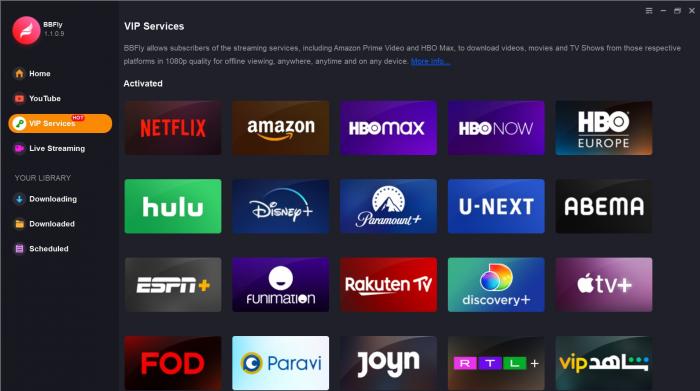
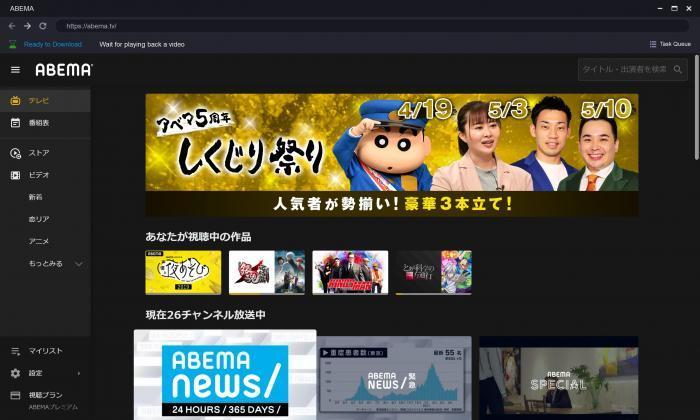
On a Windows 11 PC with an SSD, our May 2026 cold-start check opened BBFly in about three seconds. That observation applies to that setup; login and page loading still depend on the system, connection, and ABEMA response.
Analyze the Video and Choose Output
- Start playback or open the video's detail page so the app can analyze the available title.
- Choose an available episode, video quality, audio track, subtitle option, and MP4 or MKV output.
- Select the immediate start option or add the title to the queue, using the labels shown in the current app version.
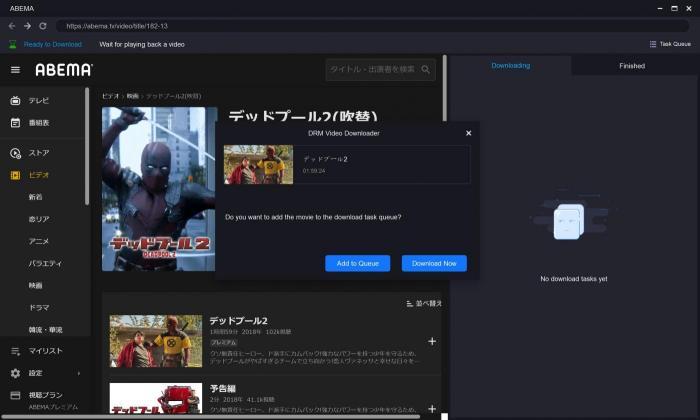
During a Windows 11 check with one accessible ABEMA episode, opening the title triggered the analysis panel and exposed the available output choices. This confirmed the workflow for that title without implying that every program will analyze successfully.
Queue, Save, and Check the File
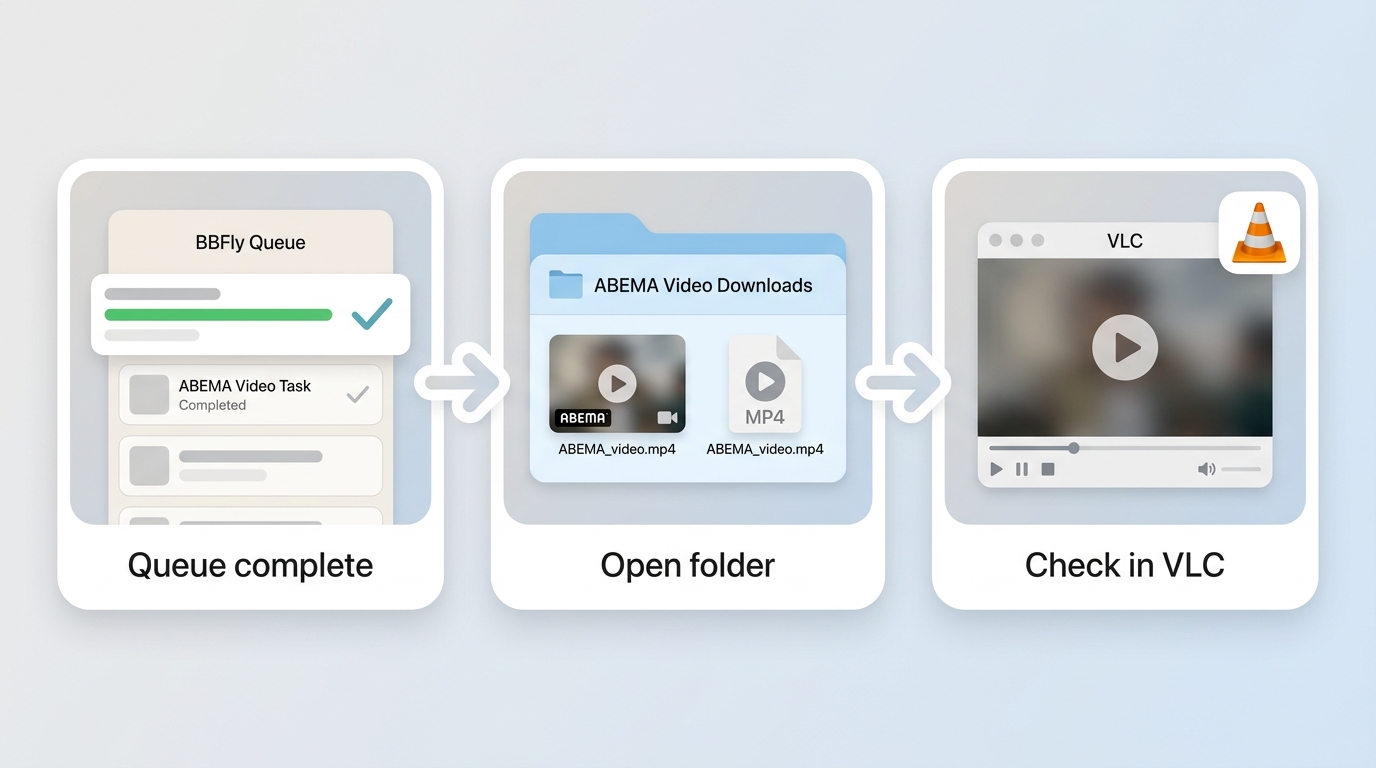
- Start the selected task and monitor it in the active queue.
- When it completes, open the output folder from the completed-task entry.
- Play the local file with a compatible player and confirm video, audio, subtitles, and duration before adding more titles.
If you already use VLC Media Player, it can check a compatible output file; installing a particular player is not required. Transfer to another personal device depends on the selected format and that device's playback support.
I recommend a one-title trial save before a series queue. It catches access, subtitle, and output issues early, while a long queue merely repeats the same mistake at scale.
ABEMA Failures Have Different Causes
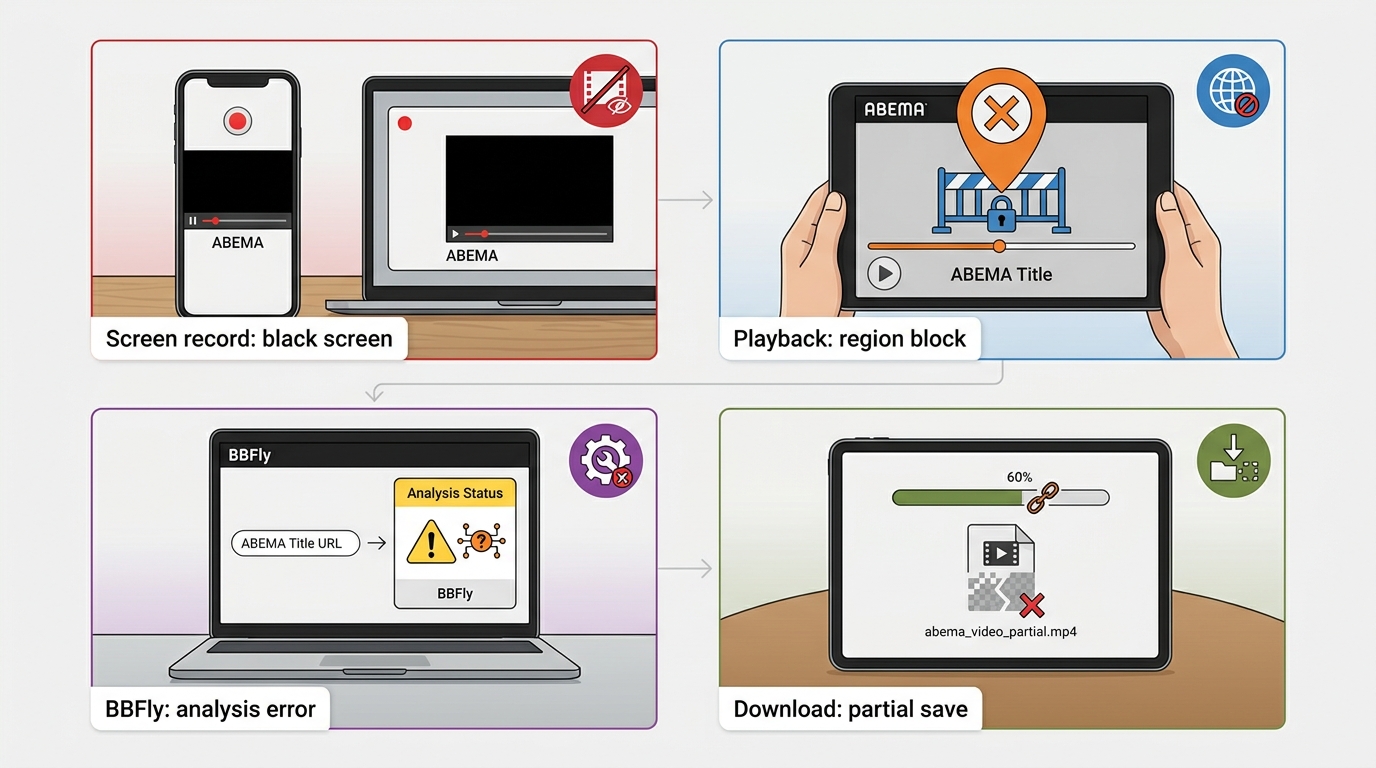
An ABEMA black screen, regional block, analyzer error, and partial save are different failures. Identify the stage first; applying “Run as administrator” to all of them is troubleshooting by superstition.
Black Screen During Screen Recording
If ABEMA screen recording captures sound but no video, protected playback is the likely cause. Test whether normal playback works, then stop repeating the same built-in capture attempt if the result remains black.
Login, Analysis, and Region Errors
An ABEMA analyzer error can begin with an expired login, a page change, regional unavailability, or a title the current app cannot analyze. Sign in again, reopen the title, update the desktop app if available, and test one accessible video.
Open-source and commercial tools can both be affected when a streaming platform changes its pages or protection behavior. That is a platform-compatibility issue, not proof that administrator privileges will solve it.
Partial or Failed Saves
An ABEMA partial download may result from a connection interruption, insufficient storage, a changed title response, or a failed queue item. Retry one title after checking storage and connection, then inspect the completed file before resuming a batch.
On a Windows 11 test machine, interrupting the connection during one queued title left an incomplete result rather than a valid full video. Restarting with stable access and a single-item queue made the failure easier to isolate.
Responsible Use Has Clear Boundaries
Save only ABEMA content you are authorized to access, and use it for personal offline viewing where ABEMA's terms and applicable law permit. Copyright, sharing, commercial use, and regional restrictions remain relevant regardless of the method.
A local-file workflow is not a promise of universal legality or universal title support. Do not redistribute saved material, use it for public performance, or treat recording as a way to avoid an active account requirement.
Choose the Method That Fits
Choose ABEMA's official offline feature for eligible in-app mobile viewing. Built-in recording is worth a quick test but may return a black screen; BBFly is one desktop alternative for authorized, accessible content when a standard local file better fits the workflow.
If I were choosing, I would confirm access first, test one supported title second, and queue more only after checking the file. Platform updates can temporarily change results, so a small verification beats a confident assumption.
FAQ
Can I use ABEMA's recording options from the United States?
You may encounter regional unavailability before any recording method starts. Confirm that ABEMA and the selected title play normally from your location; a recorder or desktop workflow should not be expected to restore unavailable access.
Why does my ABEMA screen recording show a black screen?
Protected playback can prevent a built-in recorder from capturing usable video even when audio is present. That symptom is different from an ABEMA login or desktop analyzer failure.
Can ABEMA's official offline downloads be saved on a PC?
ABEMA's official offline feature is intended for eligible viewing inside its supported app. A PC local-file workflow is a separate method with its own access, authorization, compatibility, and title limits.
Can every protected or unavailable ABEMA title be saved?
No. Regional access, account authorization, title eligibility, playback restrictions, and platform changes can all prevent recording or saving. I would treat a failed one-title test as a limit to investigate, not a cue to force access.