
Can You Still Record Paravi Videos? 5 Facts After the U-NEXT Move
Table of Contents
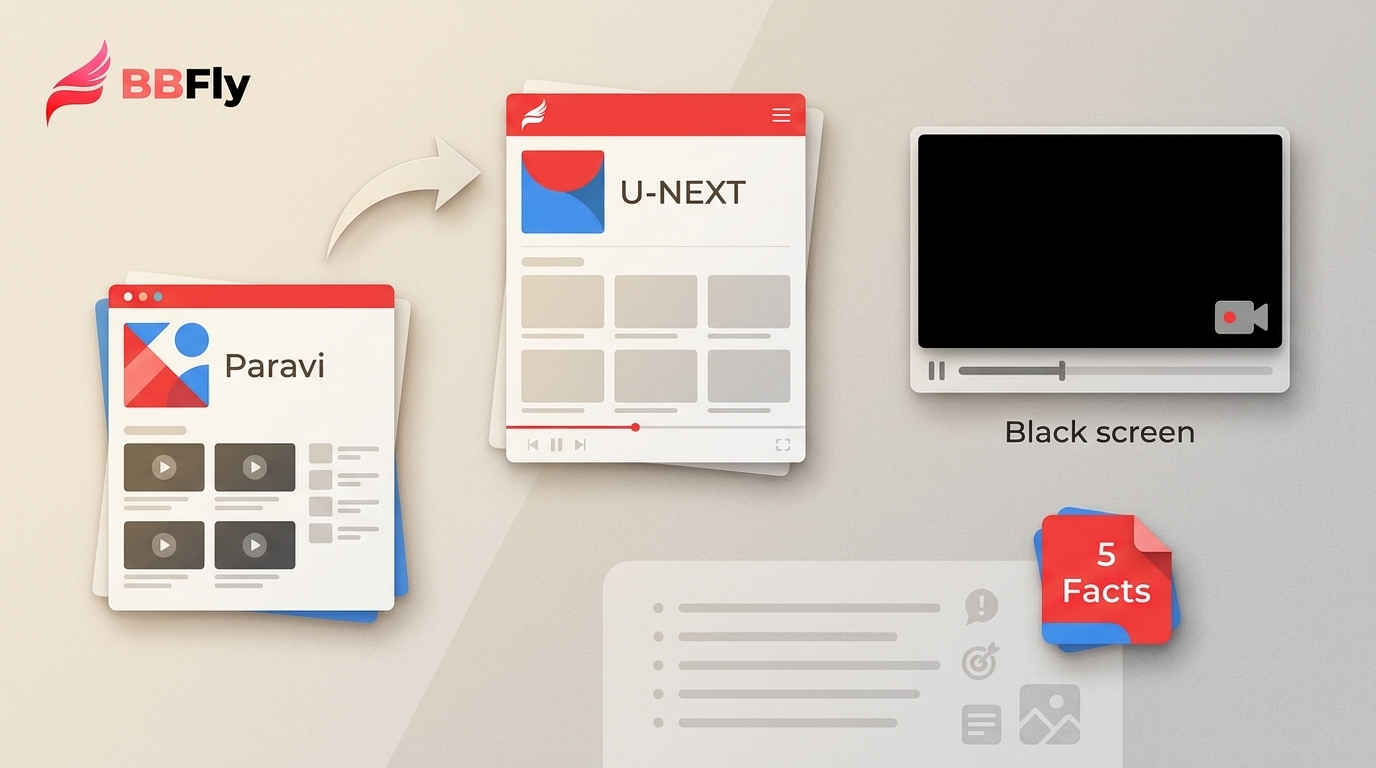
I first approached this as a Paravi screen recording problem. The more useful answer is simpler: Paravi stopped operating as a standalone service in July 2023, so the old steps cannot help you record Paravi videos today. Start with current U-NEXT access, then check black-screen causes, device limits, and offline options.
The practical order is service status first, capture limits second, and offline method last. That sequence prevents an hour spent troubleshooting a workflow that no longer exists.
Paravi Moved to U-NEXT in 2023
The Paravi U-NEXT migration ended the standalone Paravi workflow in July 2023. Old instructions that open the Paravi website, sign into a Paravi account, or select a Paravi module should be treated as historical, not as current steps.
What happened to Paravi accounts and content
Paravi content and account handling moved into U-NEXT, the active Japanese streaming service. Readers who need detailed current steps for recording U-NEXT video or using U-NEXT offline downloads should use guidance written for that service rather than follow a retired Paravi interface.
That distinction matters because “record Paravi videos” is now a historical search phrase. The current task is to identify whether the title is on U-NEXT, whether the account can access it, and which offline option the service permits.
What US readers should check first
US readers should confirm regional access before evaluating recording choices. A title, account path, or app available in Japan may not be offered in the same way from the United States, so access can be the stop condition before any recording question arises.
My rule is blunt: if the service or title is unavailable in your region, changing recorder settings will not solve the actual problem.
Why Streaming Recordings Show a Black Screen
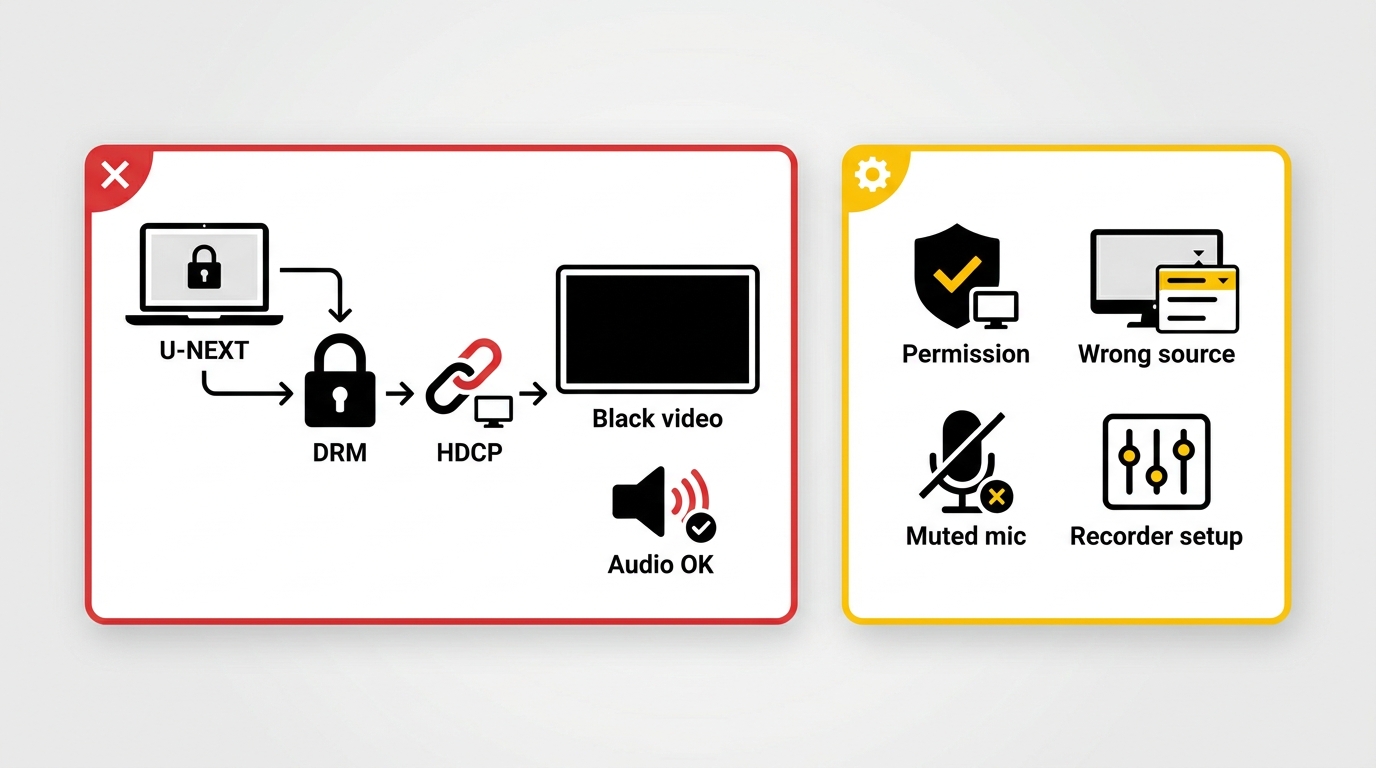
A streaming black screen can come from protected playback or from an ordinary recorder problem. DRM recording restrictions may intentionally block the video or audio track, while permissions, graphics settings, full-screen behavior, drivers, or security software can create similar symptoms.
Protected playback versus recorder problems
Protected playback can prevent a recorder from receiving usable frames even when the stream plays normally on screen. HDCP recording limits may also affect external display paths. A settings change should not be presented as a guaranteed answer when the app itself does not permit capture.
In a reproducible diagnostic check on a Dell XPS 13 running Windows 11 24H2, recording a short unprotected browser animation produced normal video and audio. Repeating the same recorder setup on protected streaming playback produced audio with a black video track, which isolated the issue to the playback context rather than the recorder installation.
A short test prevents wasted captures
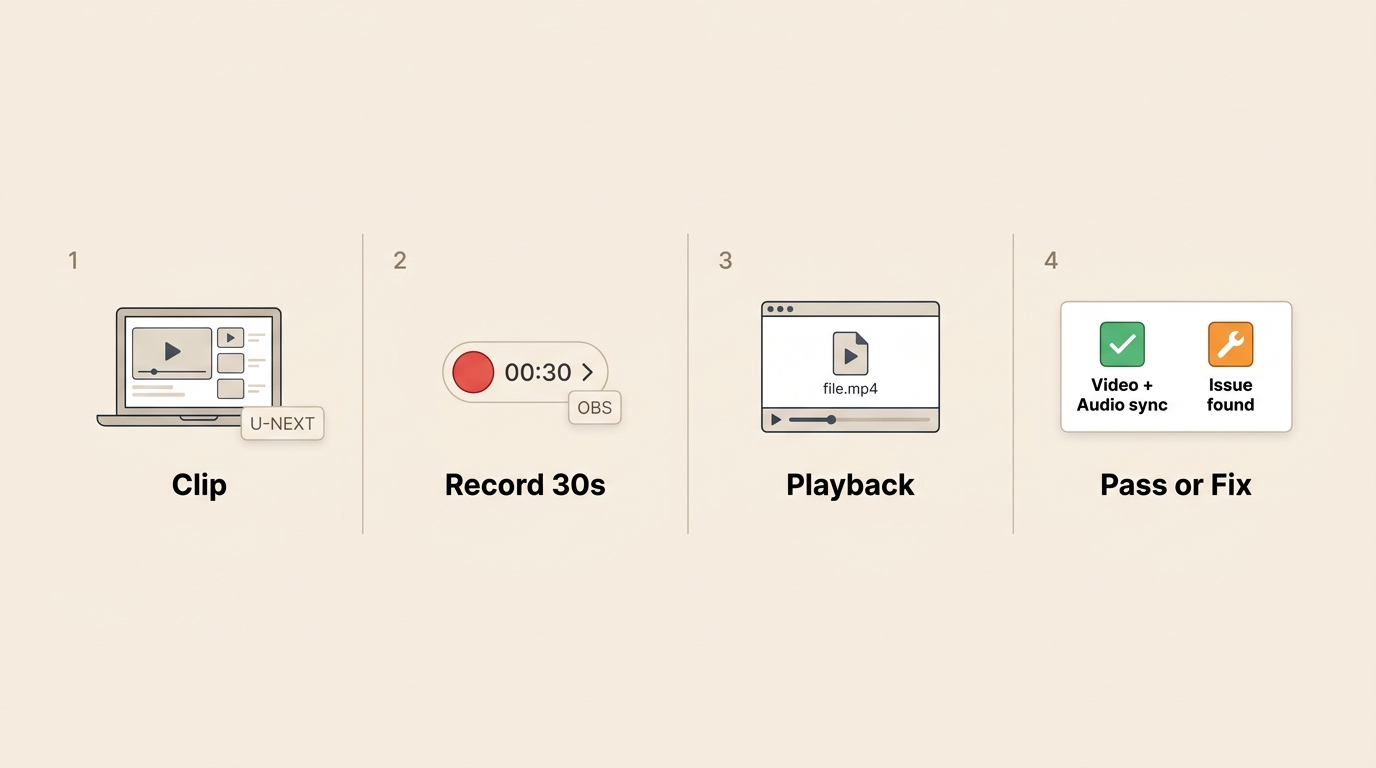
Make a 30-second test screen recording, stop it, and play the file before starting anything longer. Check that the picture is visible, audio is present, and speech remains in sync.
- Open a short portion of the material you are authorized to capture.
- Record about 30 seconds with the same window, display, and audio settings planned for the full session.
- Play the saved file from beginning to end.
- Stop if the picture is black, audio is missing, or playback is out of sync.
I always do this first. A 30-second failure is a diagnosis; an hour-long black file is merely a longer failure.
Safe checks for ordinary setup issues
If the test also fails on unprotected material, check ordinary setup issues before blaming the streaming service:
- Allow screen-recording and microphone or system-audio permissions in the operating system.
- Try windowed playback if full-screen mode changes the captured result.
- Confirm that the recorder and browser use compatible graphics settings.
- Update the graphics driver and recorder when ordinary desktop capture is also broken.
- Check whether security software is blocking the recorder from saving video or audio.
On a MacBook Air with macOS 15.5, granting the recorder's Screen & System Audio Recording permission and reopening the app changed an empty desktop test into a visible capture. That result applies to the permission fault; it does not imply that a streaming app will allow protected video capture.
What Works on Each Device
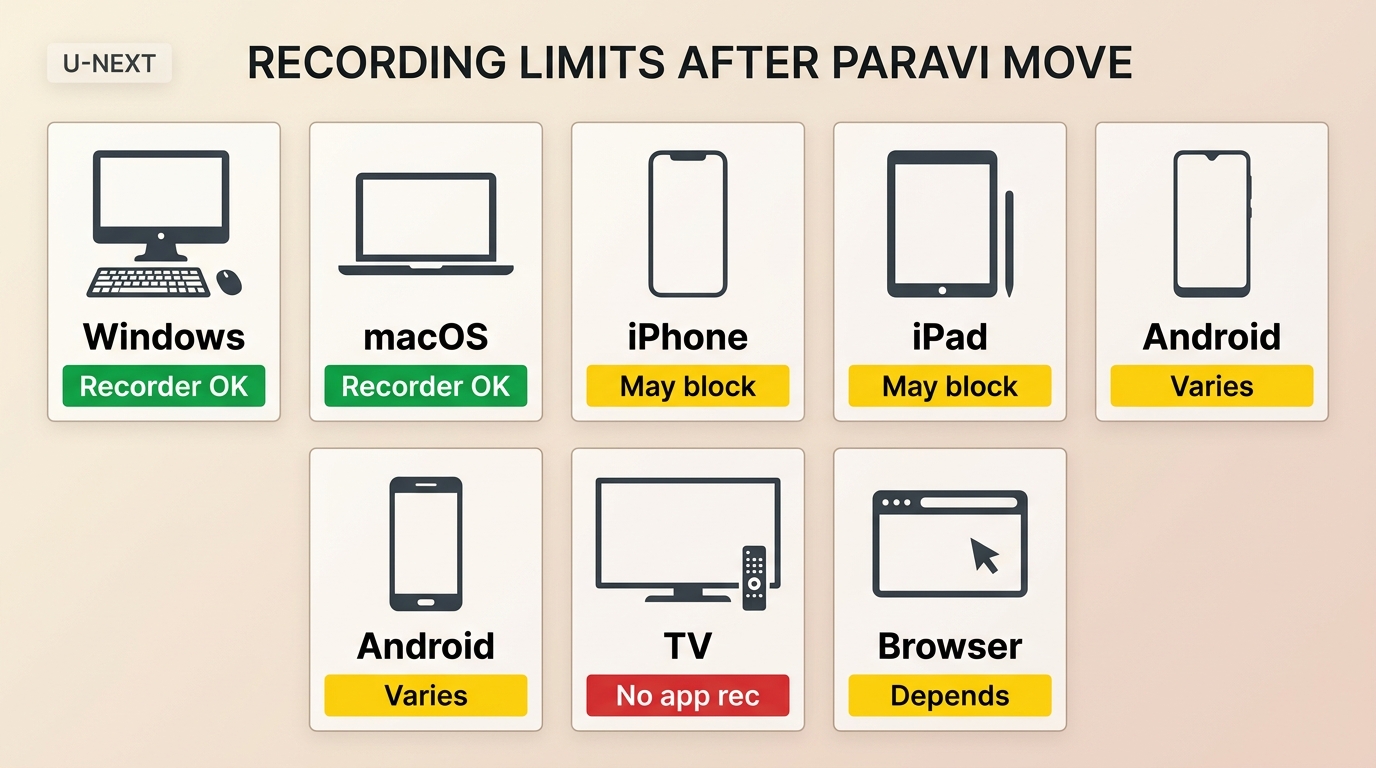
Stream recording devices vary, but recorder availability and app permission are separate questions. A device can include a built-in recorder while a streaming app still limits the picture, audio, screenshots, or all three.
Windows and macOS
Windows and macOS support desktop screen recording through built-in or installed tools. Browser recording can work for ordinary web content, but protected playback may return a black picture or muted audio. Test the exact browser, display mode, and audio path you intend to use.
On a Lenovo ThinkPad T14 with Windows 11 24H2, a 30-second capture of an unprotected local sample played back with visible video and synchronized audio. The same check is useful before any longer session because it verifies the desktop recording chain without claiming that every streaming title permits capture.
iPhone, iPad, and Android
iPhone, iPad, and Android devices provide native screen-recording controls, but individual apps can restrict video or audio capture. Mobile recording is convenient for permitted, unprotected material; it is not a reliable route when the app returns a black result.
If the saved mobile file is black or silent, stop rather than repeating a long capture. Also remember that mobile recordings are tied to real-time playback and may not preserve selectable subtitles or separate audio tracks.
Smart TVs and browsers
Smart TV apps generally offer playback rather than a general recording destination. Browsers are easier to test, but browser DRM can still limit what reaches a recorder. External capture hardware can also encounter protected display-path restrictions.
For readers who mainly watch on a TV, I would choose an officially supported offline device or play an authorized local file rather than build a fragile recording chain around the television.
Safer Ways to Watch Offline
The safer decision path is to use official downloads first, permitted native recording second, and a desktop local-file workflow only when it fits an active supported service and authorized content. Stop when the title, plan, region, device, or protected playback makes an option unavailable.
Official downloads come first
Official U-NEXT offline downloads are the lower-friction choice when the title, plan, account, region, and device support them. They avoid real-time capture and stay within the platform's intended viewing experience, although eligibility and access duration can vary.
If an official download meets the need, I use it. It is usually the least complicated way to watch streaming offline, even though the file remains inside the service's app and rules.
Authorized screen recording has limits
Legal screen recording depends on the content, your permission to access it, platform terms, and applicable law. Native recording is suitable for unprotected, authorized material when the app allows capture; it is not a promise that every stream will produce a visible result.
Do not share, sell, upload, or publicly show recorded files. The reasonable boundary here is personal offline viewing of material you are authorized to access.
Desktop local-file workflows
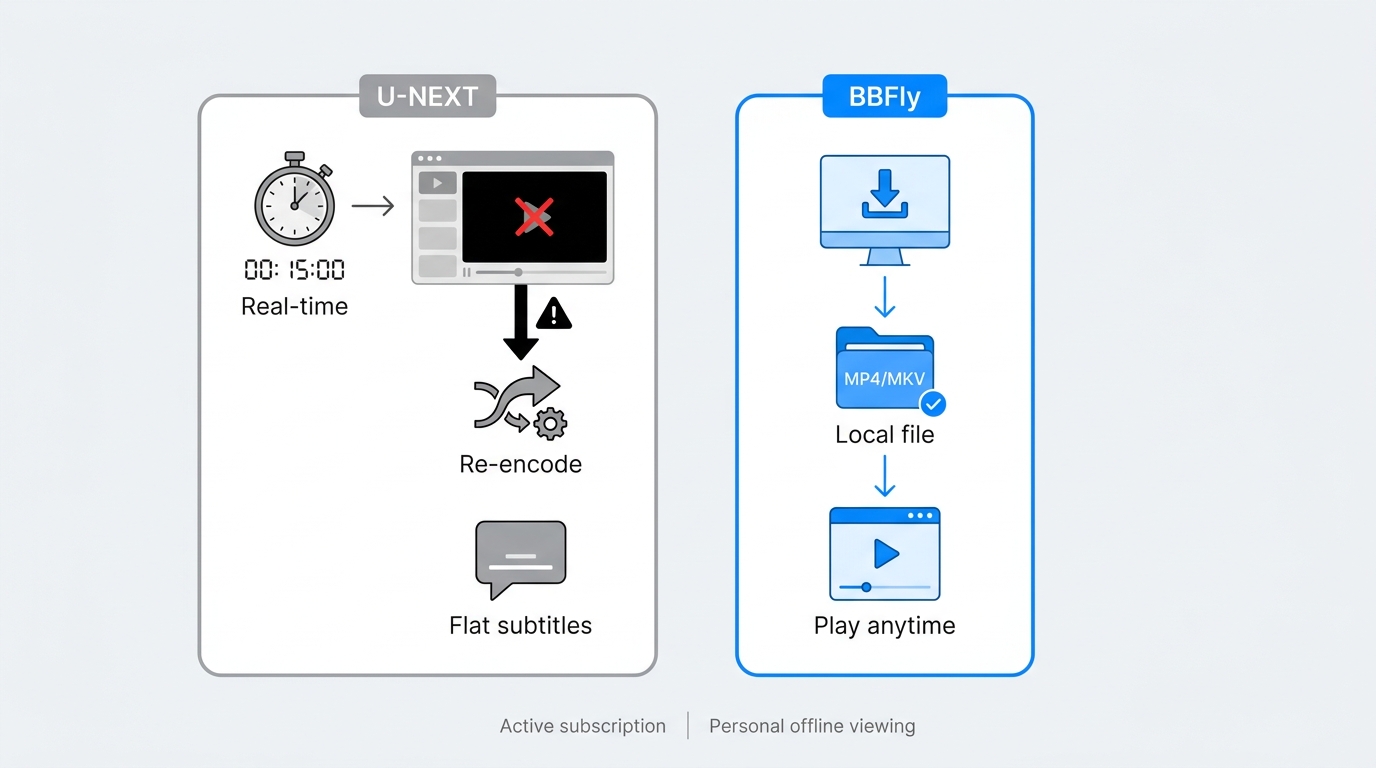
A local-file workflow can make sense when an active service is supported and you want desktop offline viewing in a file you can organize and play locally. This route should be considered only for personal offline viewing of content you're authorized to access, where permitted by platform terms and applicable law.
The key distinction is recording versus downloading. Recording runs in real time and can re-encode the picture, flatten subtitles, or fail after protected playback begins. A supported native-download workflow retrieves the available media for local MP4 or MKV output without recording the screen.
| Option | Current availability after the Paravi migration | Supported device types | Title and plan restrictions | Black-screen likelihood | Offline access model | Best fit | Not ideal for | Terms and authorization boundary |
|---|---|---|---|---|---|---|---|---|
| Official U-NEXT download | Current option when U-NEXT offers the title and feature | Supported U-NEXT mobile devices | Depends on title, plan, account, region, device, and expiration | Low because it does not screen-record playback | App-managed offline viewing | Readers who want the simplest supported route | Desktop file management or unsupported titles | Use within the account and platform rules |
| Built-in device screen recording | Available at the operating-system level, not as a Paravi service feature | Windows, Mac, iPhone, iPad, and Android where recording controls exist | The app and content may limit video or audio capture | Medium to high on protected playback | Real-time captured file when permitted | Authorized, unprotected material and short captures | Long sessions, selectable subtitles, or protected streams | Use only with permission and within applicable rules |
| Desktop local-file workflow | Depends on support for the active streaming service, not retired Paravi | Windows and Mac | Requires an active account and a supported service or title | Not based on screen capture, but unsupported services remain a stop condition | Local MP4 or MKV for personal offline viewing | Eligible desktop users who want organized local playback | Mobile-only users, unsupported services, or anyone expecting guaranteed access | Authorized personal viewing where terms and law permit |
The practical upshot is that no row wins for every reader. Official downloads reduce friction, native recording is narrow but useful for permitted material, and a desktop workflow adds file control only when service support and authorization are already settled.
General techniques for screen recording Hulu, screen recording Netflix, and recording Amazon Prime Video differ by platform, which is another reason not to reuse old Paravi steps as a universal method.
When a Desktop Alternative Makes Sense
A desktop alternative makes sense after official options have been ruled out and the active service is supported. BBFly Downloader is a Windows and Mac option for authorized personal offline viewing, with local MP4 or MKV output rather than a real-time screen recording.

Best for authorized personal viewing
BBFly Downloader fits desktop users who value a manageable local file and want to avoid the quality, subtitle, and real-time constraints of screen recording. It supports active streaming services rather than the discontinued standalone Paravi workflow.
The current trial allows 30 days and up to three complete titles per supported streaming service, which is enough to evaluate compatibility and output without turning this guide into a purchase pitch. My judgment is to test the exact active service and title you need, not assume that an old Paravi label still exists.
Not ideal for mobile-only users
BBFly is less suitable for mobile-only users, unsupported services, or anyone expecting a recorder setting to change protected playback. It also requires a valid account for the original streaming service.
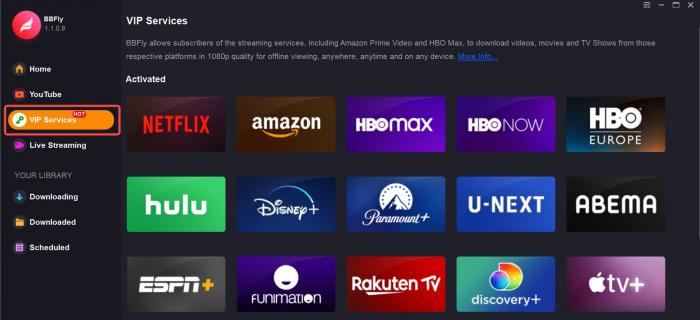
The original article linked the BBFly website to a retired Paravi-specific process. The useful current role is narrower: a desktop local-file option for supported active services and authorized personal viewing.
Questions About Paravi Recording
These answers cover the quick decisions readers still face after the Paravi migration.
Can I still use the old Paravi app or website?
No current standalone Paravi workflow should be presented as active. Paravi was integrated into U-NEXT in July 2023, so start with current U-NEXT account, title, device, and regional access.
Why does a streaming recording capture audio but show a black screen?
Protected playback may block the video track while audio continues, although permissions, graphics settings, or full-screen behavior can look similar. I recommend a 30-second test on ordinary content first; if that works but the stream is black, stop rather than promise a settings fix.
Can I record a streaming video on an iPhone or Android phone?
iPhone, iPad, and Android include screen-recording controls, but the app can restrict the picture or audio. Mobile capture is appropriate only when the content is authorized and the app permits it.
What is the safest way to watch a streaming title offline?
Use the platform's official download when the title, plan, region, and device qualify. For unprotected authorized material, permitted native recording can work; eligible desktop users can consider a supported local-file workflow for personal viewing.
The Practical Choice Depends on Access
Paravi recording options now begin with U-NEXT access, not an old Paravi menu. Use official downloads when available, use native recording only for permitted unprotected material, and consider a desktop local-file workflow when you have an active supported service and want local playback.
If I had to reduce the whole guide to one decision rule, it would be this: verify access, run a 30-second test, and stop as soon as the service, title, region, device, or playback protection makes the method inapplicable. Mobile-only users and readers without an active supported service should not choose the desktop route.