
How to Record Amazon Prime Video Without Black Screen (3 Methods, Tested June
Table of Contents
Amazon Prime Video goes black during screen recording because DRM (Digital Rights Management) blocks display-layer capture on every device and platform. Three desktop approaches work around this in 2026: BBFly's Native Download Mode (stream-level extraction), OBS Studio paired with Firefox (free screen capture, increasingly unreliable), and PlayOn Home (DVR-style real-time recording). No mobile workaround currently exists.
Since you're here, you may also be interested in how to record on Hulu and how to screen record Netflix shows.
Why Amazon Prime Video Goes Black When You Record
The black screen is not a glitch — it is the intended result of DRM enforcement. When any display-layer capture tool tries to grab the video frame, the protection system detects the attempt and replaces the output with a black frame. Understanding exactly where that block happens determines which approaches can work.
DRM and HDCP: What Is Actually Blocking Capture
Amazon Prime Video uses Widevine DRM on browsers and apps, layered with HDCP (High-bandwidth Digital Content Protection) on hardware outputs. When a screen capture tool intercepts video at the display level, the DRM layer detects the capture attempt and replaces the video frame with a black output — this is the amazon prime screenshot black issue most users first notice.
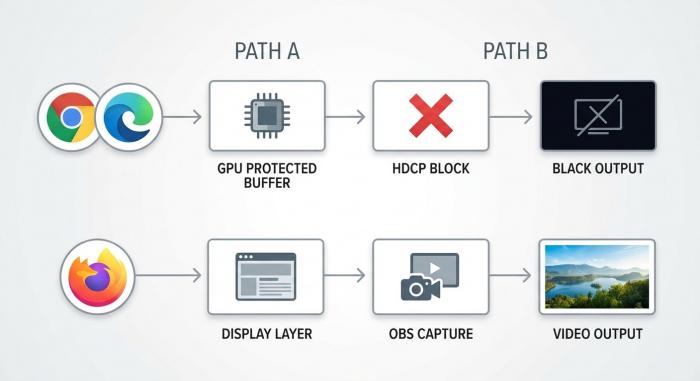
Firefox can sidestep this in specific configurations because its software rendering pipeline does not route video through the GPU's protected memory path — which is where HDCP enforcement actually lives. Chrome and Edge use hardware-accelerated video decoding by default, keeping the stream inside the GPU's protected buffer and making it inaccessible to any screen capture tool.
Recording vs. Downloading: Two Different Approaches, Two Different Results
This distinction matters more than the tool name. Screen-layer capture tools — OBS, built-in OS recorders, any tool that grabs the display buffer — intercept video after it has been decoded and handed to the GPU. At that point, HDCP enforcement is already active, and the result is a black frame.
Stream-level extraction works differently. BBFly's Native Download Mode pulls the encoded video stream before it ever reaches the display layer, so the HDCP trigger that causes black screens is never activated. The output is a standard MP4 or MKV assembled from the original stream segments.
My take after testing both paths: any tool that intercepts the display will fail when Amazon tightens HDCP enforcement. Tools that extract at the stream level are structurally more robust against those updates because they operate at a different point in the pipeline entirely.
Which Devices and Browsers Are Affected
As of June 2026, DRM-enforced black screens affect the following configurations:
- iPhone and iPad (iOS 18): Apple's native screen recording is fully blocked by the Prime Video app's DRM hooks. The black frame triggers the moment recording starts, with audio also muted.
- Android (all major OEMs): The Prime Video app sets the FLAG_SECURE window flag, blocking Android's MediaProjection API. This affects Samsung, Google Pixel, and all devices running current Android versions.
- Windows and Mac (Chrome or Edge): Hardware-accelerated video decoding routes the stream through GPU-protected memory, blocking any screen capture tool.
- Windows and Mac (Firefox with hardware acceleration disabled): The only browser configuration where display-layer capture tools like OBS can still access the video frame — though reliability has declined in 2026.
What Amazon's Official Download Feature Can and Cannot Do
Before reaching for a third-party tool, it's worth understanding what Amazon's own download feature actually provides — because for many use cases, the limitations are the reason people look elsewhere in the first place.
Download Window, Playback Limits, and Title Cap Explained
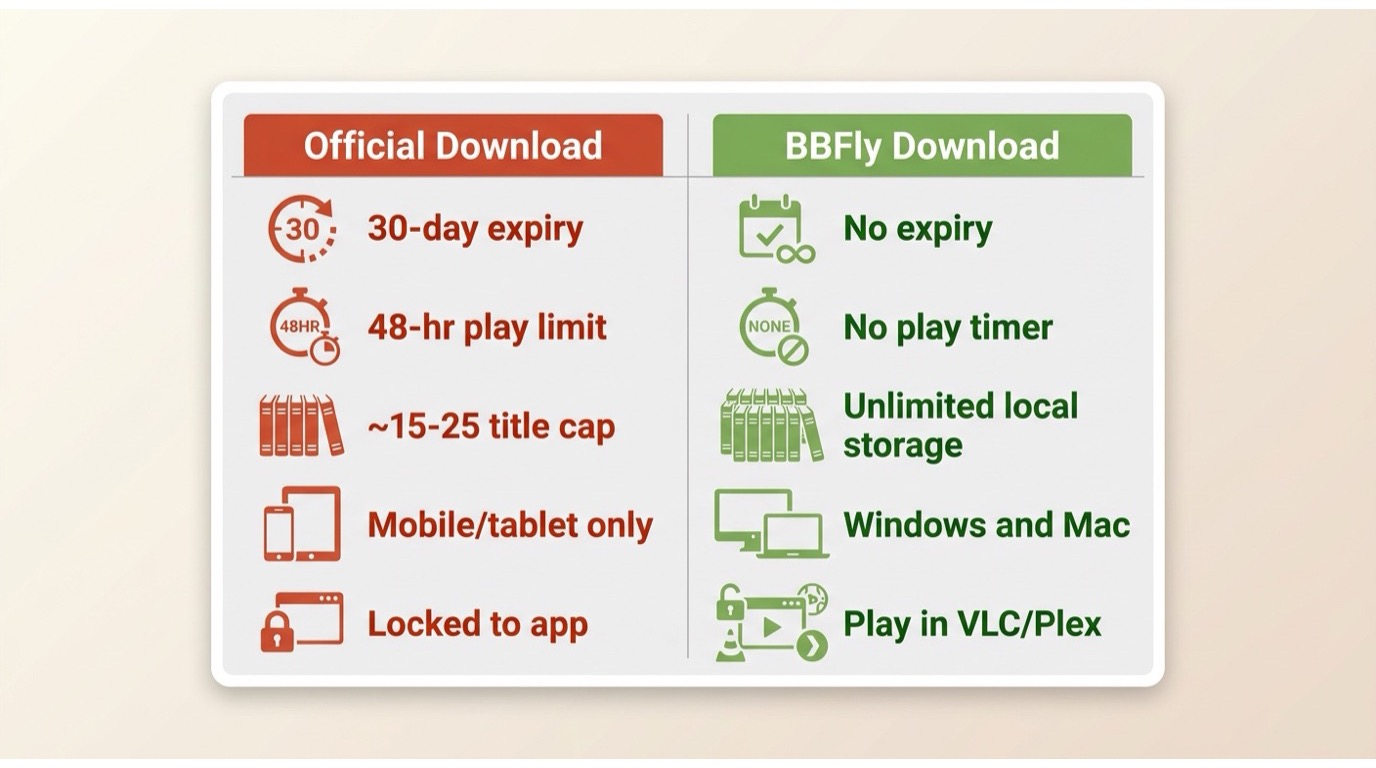
Amazon Prime Video's official download feature (available on the mobile app and Fire tablets) operates under several restrictions, as of June 2026. Check Amazon's official Help Center for the latest limits, as these can change with licensing updates:
- 30-day download window: Downloaded titles expire 30 days after you save them, whether you watch them or not.
- 48-hour playback limit: Once you start watching a downloaded title, you have 48 hours to finish it before it locks.
- Title cap: Depending on content licensing agreements, accounts can hold roughly 15 to 25 downloaded titles at a time. The exact number varies by title and region.
- Subscription-dependent DRM: Downloaded files are encrypted and validated against your active Prime subscription. If the subscription lapses, downloaded content becomes unplayable.
- Locked to the official app: Downloaded files cannot be transferred to a USB drive, external hard drive, or any media player outside the Amazon app. They are completely confined to the app on the device that downloaded them.
- No desktop downloads: The official download feature is not available on Windows or Mac at all — it is mobile and tablet only.
Why Official Downloads Fall Short for Long-Term Offline Use
The 30-day window and 48-hour play-start limit work fine for a weekend trip. They start to break down for longer journeys, subscription gaps, or anyone building a personal media library. If your subscription lapses — even briefly — every downloaded title stops playing immediately. And because files are locked to the app and cannot be moved, there is no path to watch them on a Smart TV via USB, a NAS, or any media server.
For PC and Mac users specifically, the official download option simply does not exist. That gap is the main reason desktop tools enter the picture.
3 Working Methods to Save Amazon Prime Video Without Black Screen
All three methods below run on desktop (Windows or Mac) only — there is no mobile-native solution. BBFly's Native Download Mode is the most structurally consistent approach in 2026; OBS with Firefox is a free fallback that requires more setup and has become less reliable; PlayOn offers a DVR-style workflow for users already familiar with that model. All three require an active Amazon Prime Video subscription during the process.
BBFly: Native Download Mode for Clean Local Files
BBFly's Native Download Mode extracts the video stream before it reaches the display layer, which means the HDCP trigger that causes black screens is never activated. The output is a standard MP4 or MKV file for personal offline viewing of content you are authorized to access.
I tested this on a Windows 11 machine running 22H2 in June 2026. A standard 45-minute Prime Video episode completed the download without interruption, and the output file played back correctly in VLC with full audio. The workflow is straightforward enough that you do not need to configure browser settings or troubleshoot capture sources.
To use BBFly, you need:
- A Windows PC or Mac with an active internet connection
- An active Amazon Prime Video subscription
- BBFly installed (free trial available — covers 3 full-length titles within 30 days)
Standout features for Amazon Prime Video:
- 1080p output: BBFly downloads up to Full HD 1080p — a meaningful step up from Amazon's official app download ceiling of SDR 720p. Note that 1080p is the ceiling for all third-party desktop tools on Amazon due to the Widevine L3 path; the platform's own 4K HDR streams are not accessible through this route.
- File portability: The saved MP4 or MKV plays in VLC, Infuse, Plex, or any media player, and can be stored on an external drive or NAS — unlike official downloads locked to the app.
- No 30-day or 48-hour expiry: The local file is not subject to Amazon's download window or play-start timer, making it suitable for long trips or archiving titles before they leave the catalog.
- Full subtitle track download: Amazon's official app limits downloads to 2 subtitle languages. BBFly saves all available subtitle tracks in one pass — useful for language learners or multilingual households.
- Series auto-follow: BBFly can automatically save new episodes as they become available on Prime Video, so you do not have to queue each title manually.
- Lifetime license for 3 devices: BBFly offers a one-time purchase covering three machines — unlike most tools that limit lifetime licenses to a single device. A practical option for households with multiple computers.
- Bonus and trailer download: BBFly also downloads trailers, extras, and bonus content alongside main titles — useful for building a complete series archive.
- EAC3 5.1 and AAC 2.0 audio: Both audio formats are preserved in the output file.
Step-by-step: How to download Amazon Prime Video with BBFly
1. Download and install BBFly on your Windows PC or Mac from the official BBFly Amazon Prime Downloader page.
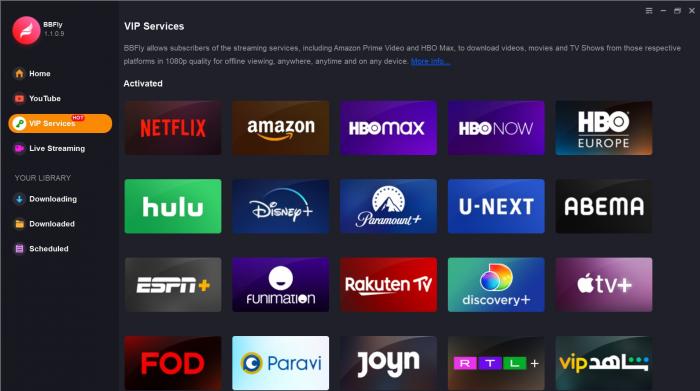
2. Open BBFly and find Amazon Prime Video under the VIP Services section.
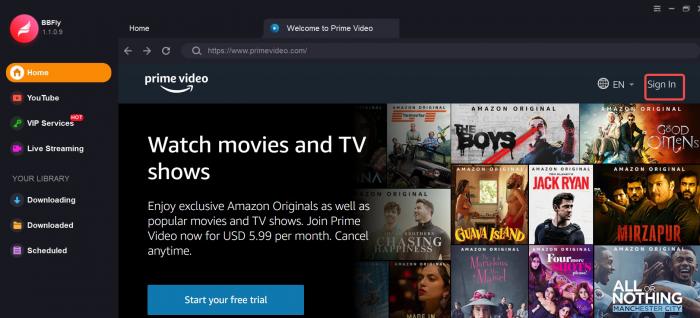
3. Sign in to your Prime Video account inside BBFly and browse to the title you want to save. Start playing it.
4. BBFly automatically detects the stream and opens a download settings panel. Select your preferred video quality, audio track, and subtitle language, then start the download.
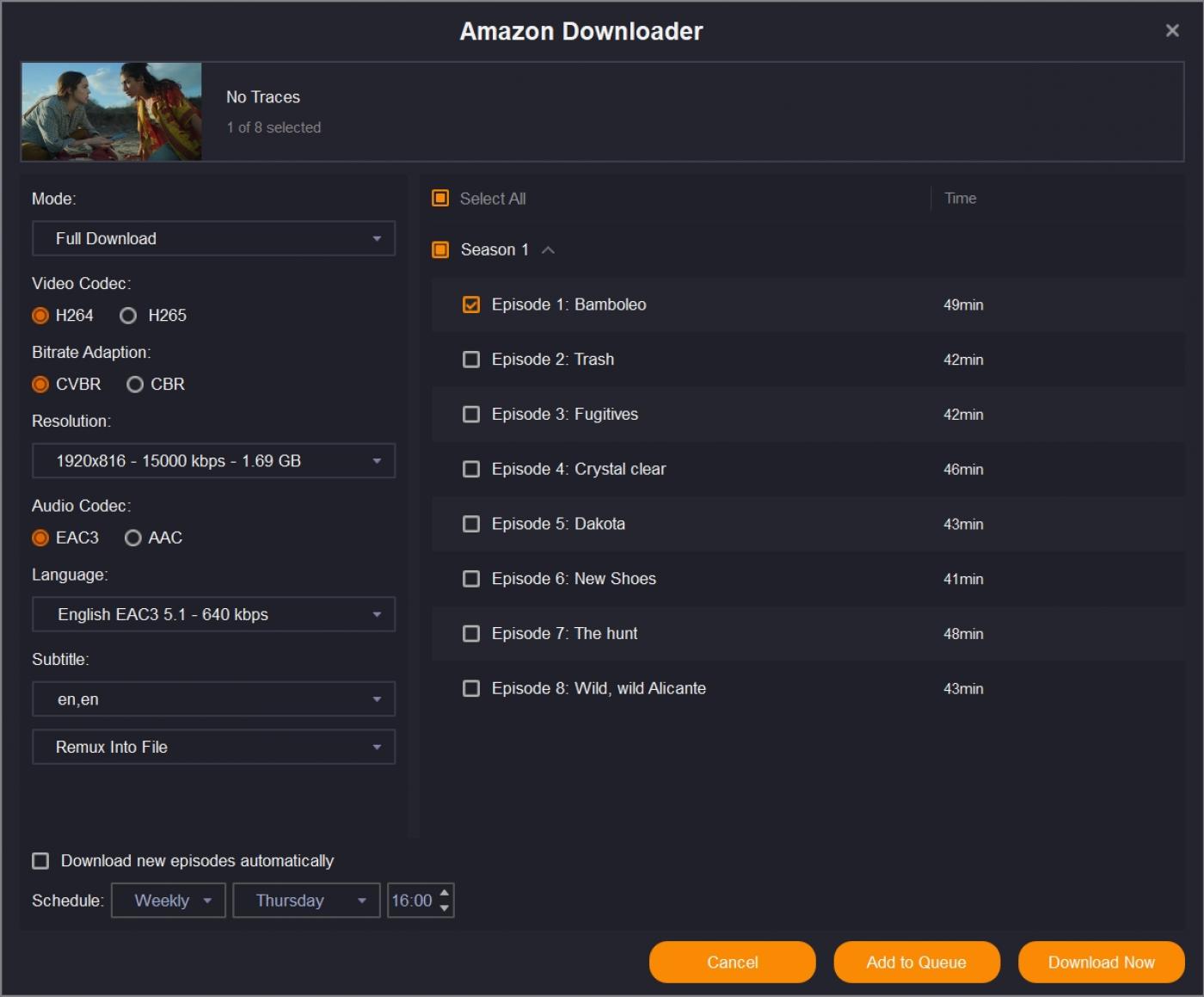
BBFly requires an active Prime Video subscription during the download process. The free trial covers 3 full-length titles — sufficient to evaluate whether the workflow fits your needs before committing to a license.
Pricing: Monthly plan at $29.90/month (1 PC), annual plan at $99.90/year (1 PC, roughly $8.33/month), or a one-time lifetime purchase at $199.90 covering 3 PCs.
Limitations: BBFly runs on Windows and Mac only — there is no mobile app. The 1080p ceiling applies to all third-party Amazon downloaders due to Widevine L3 constraints; the platform's native 4K HDR is not accessible through this path. A license is required after the 3-title free trial.
OBS Studio on Firefox: Free but Increasingly Unreliable
OBS Studio paired with Firefox is still a functional free option in specific configurations as of June 2026 — but multiple sources updated this year report declining success rates as Amazon has tightened DRM enforcement. Treat this as a fallback worth trying rather than a guaranteed solution.
A note on 2026 reliability: OBS + Firefox worked consistently through 2023 and much of 2024. Positive community reports you will find online often reference setups from one to two years ago. In 2025 and 2026, multiple sources document increasing failure rates after Amazon DRM updates. If you follow all the steps below and still see a black screen, this path may simply not be viable for your current version of Amazon's app — switching to BBFly is the most consistent alternative at that point.
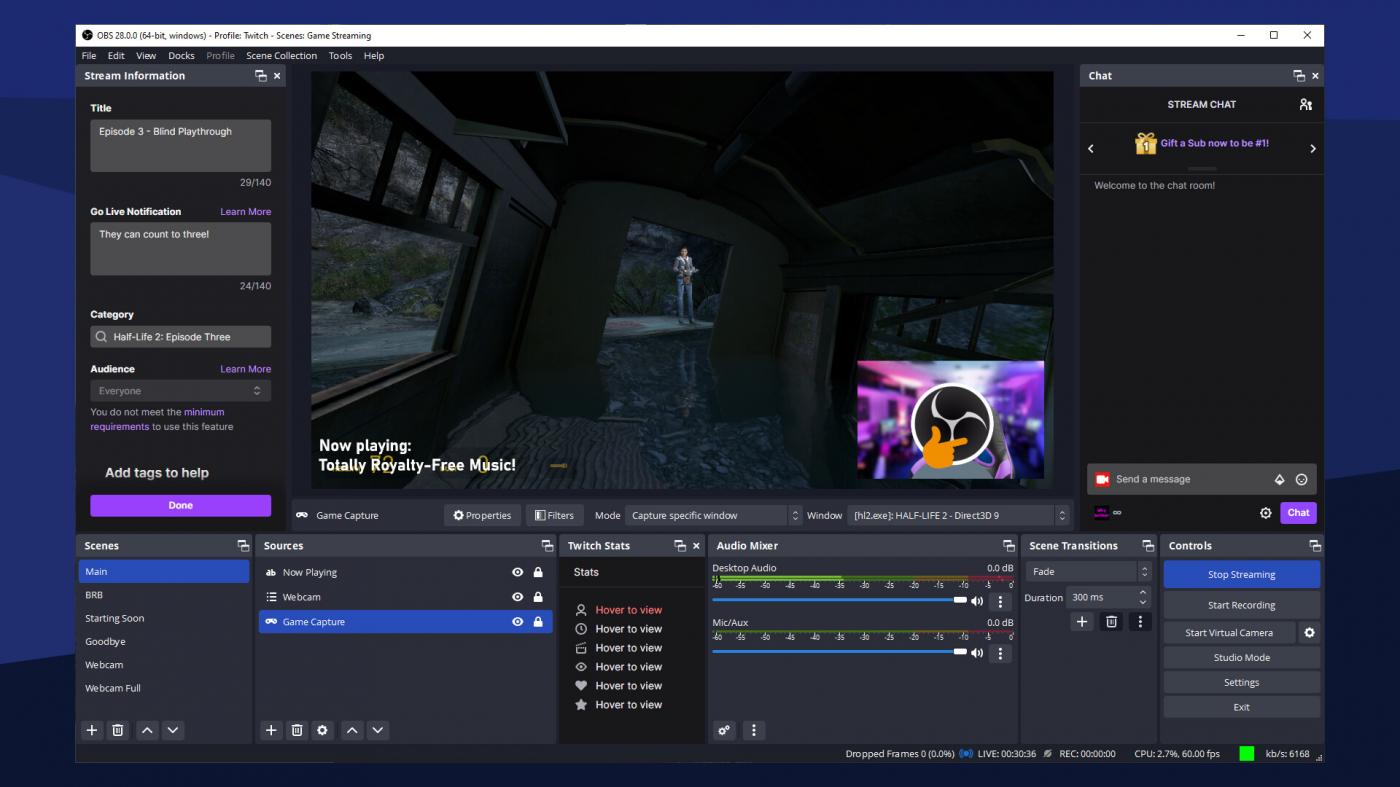
Before starting, three conditions must all be true simultaneously — any one missing will produce a black screen:
- Use Firefox, not Chrome or Edge. Both Chrome and Edge use GPU-accelerated video decoding that routes the stream through protected memory. Firefox with hardware acceleration disabled avoids this path.
-
Disable hardware acceleration in Firefox: Type
about:preferencesin the address bar, scroll to the Performance section, uncheck "Use recommended performance settings," then uncheck "Use hardware acceleration when available." This setting path is current as of Firefox 126 and later. - In OBS, use Window Capture targeting the Firefox window — not Display Capture. Display Capture may still produce a black screen on some systems even with hardware acceleration disabled.
Hardware acceleration trade-off: Disabling hardware acceleration in Firefox improves capture compatibility but may reduce video playback quality — some users report a cap at 720p — and increases CPU usage. On older machines, playback may stutter. If that happens, lower the video bitrate in OBS output settings to reduce the load.
A note from community experience (r/PrimeVideo, r/DataHoarder): this OBS and Firefox combination remains the most widely recommended free approach, but users consistently report needing to re-verify the hardware acceleration setting after every major Firefox update, as it can reset silently.
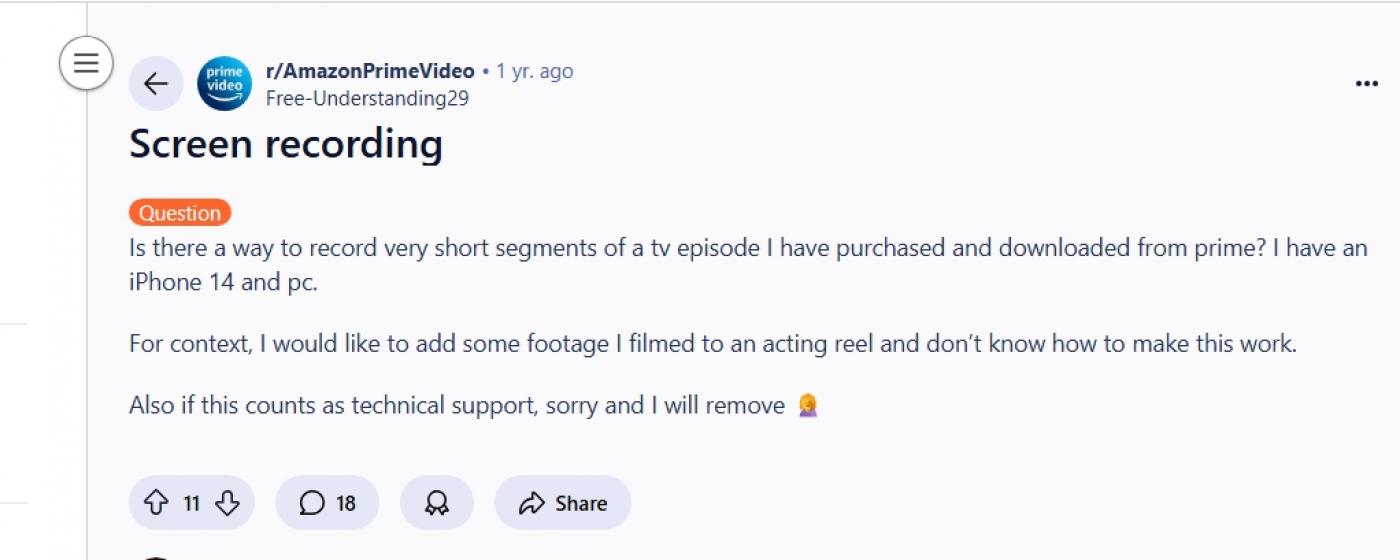
Steps to record Amazon Prime Video with OBS (tested June 2026, OBS 30.x on Windows 10 and Windows 11):
1. Download and install OBS Studio from obsproject.com, the Microsoft Store, or Steam.
2. Set up a new scene. Launch OBS, click the + button in the Scenes panel, and name it.
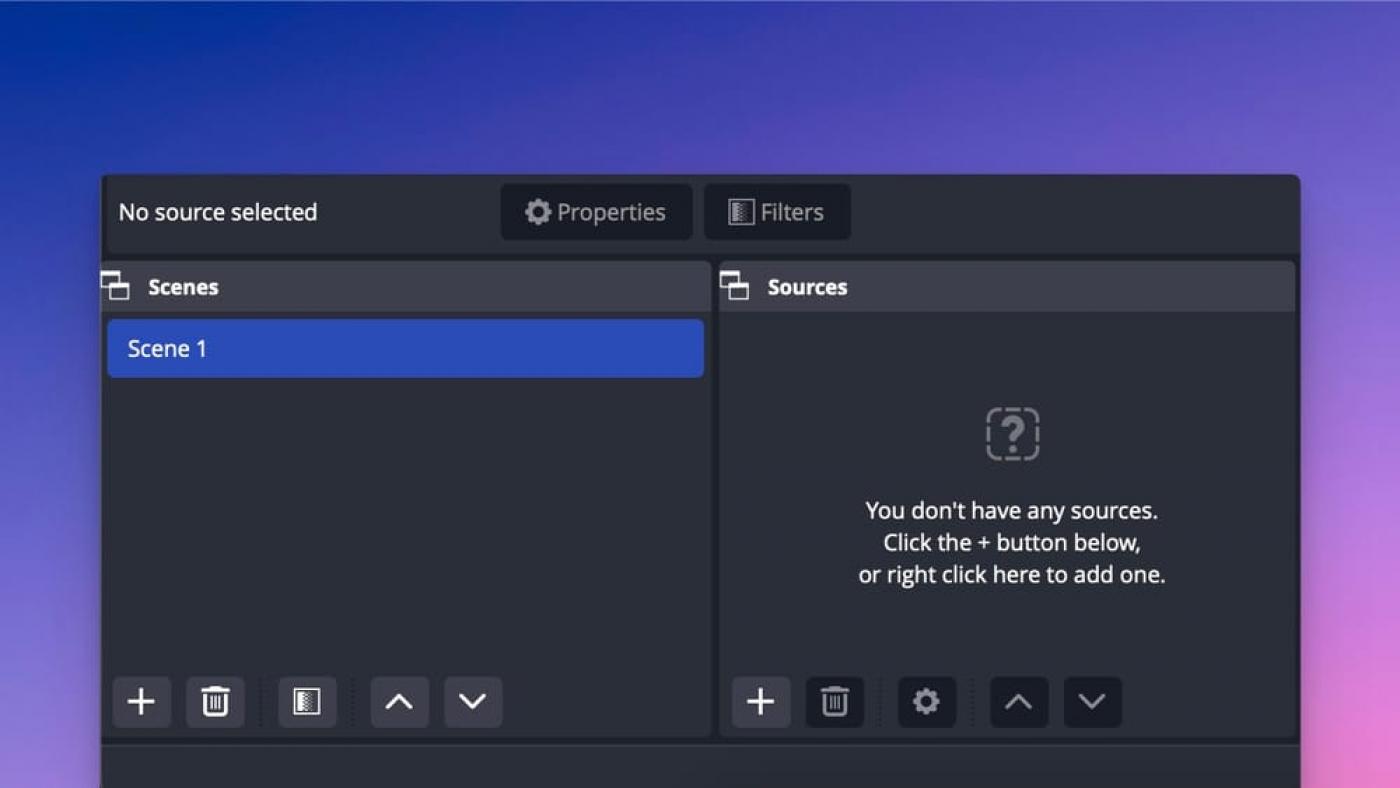
3. Add a Window Capture source. In the Sources panel, click +, select Window Capture, then choose the Firefox window where Prime Video is playing. Do not use Display Capture.
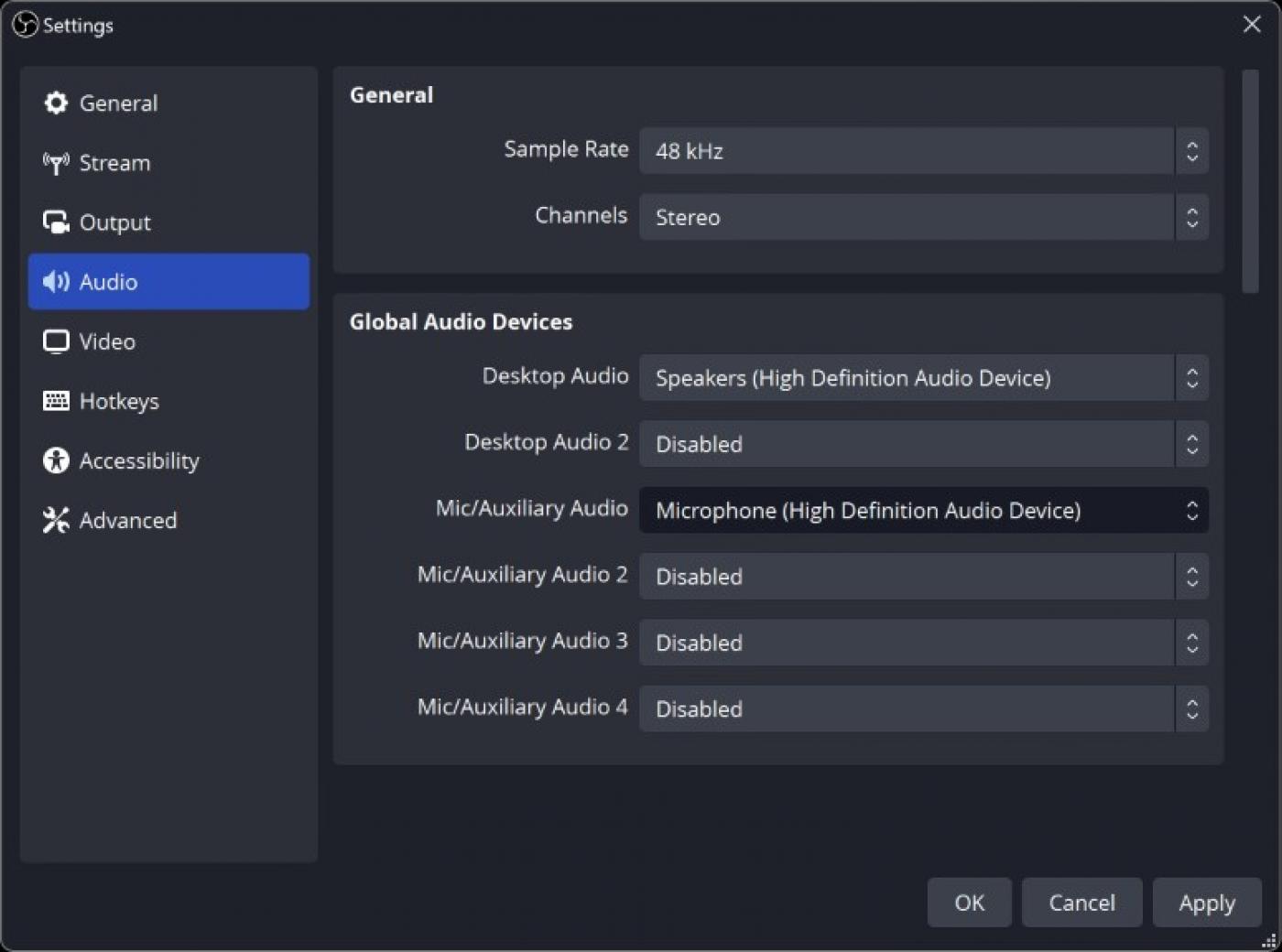
4. Configure output settings. Go to File > Settings > Output. Set your recording path, container format (MKV or MP4), and quality level.
5. Start recording. Click Start Recording in the Controls panel at the bottom right of OBS.
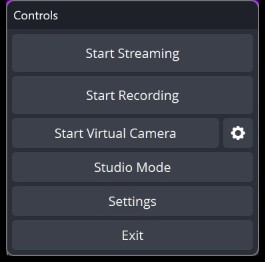
6. Stop recording. Click Stop Recording when done. The file saves to the folder you selected in step 4.
Limitations: OBS records in real time (1x speed) — a 2-hour film takes 2 hours to capture. Any ad breaks during playback will be included in the recording. OBS has no built-in editor; use a tool like LosslessCut if you need to trim the output. OBS does not download subtitles as a separate file.
PlayOn Home: DVR-Style Recording at Real-Time Speed
PlayOn Home functions as a background DVR recorder for streaming platforms, including Amazon Prime Video. It supports up to 1080p and handles ad removal from recordings. The trade-off is recording speed: like OBS, PlayOn records in real time, so longer titles require proportional wait time.
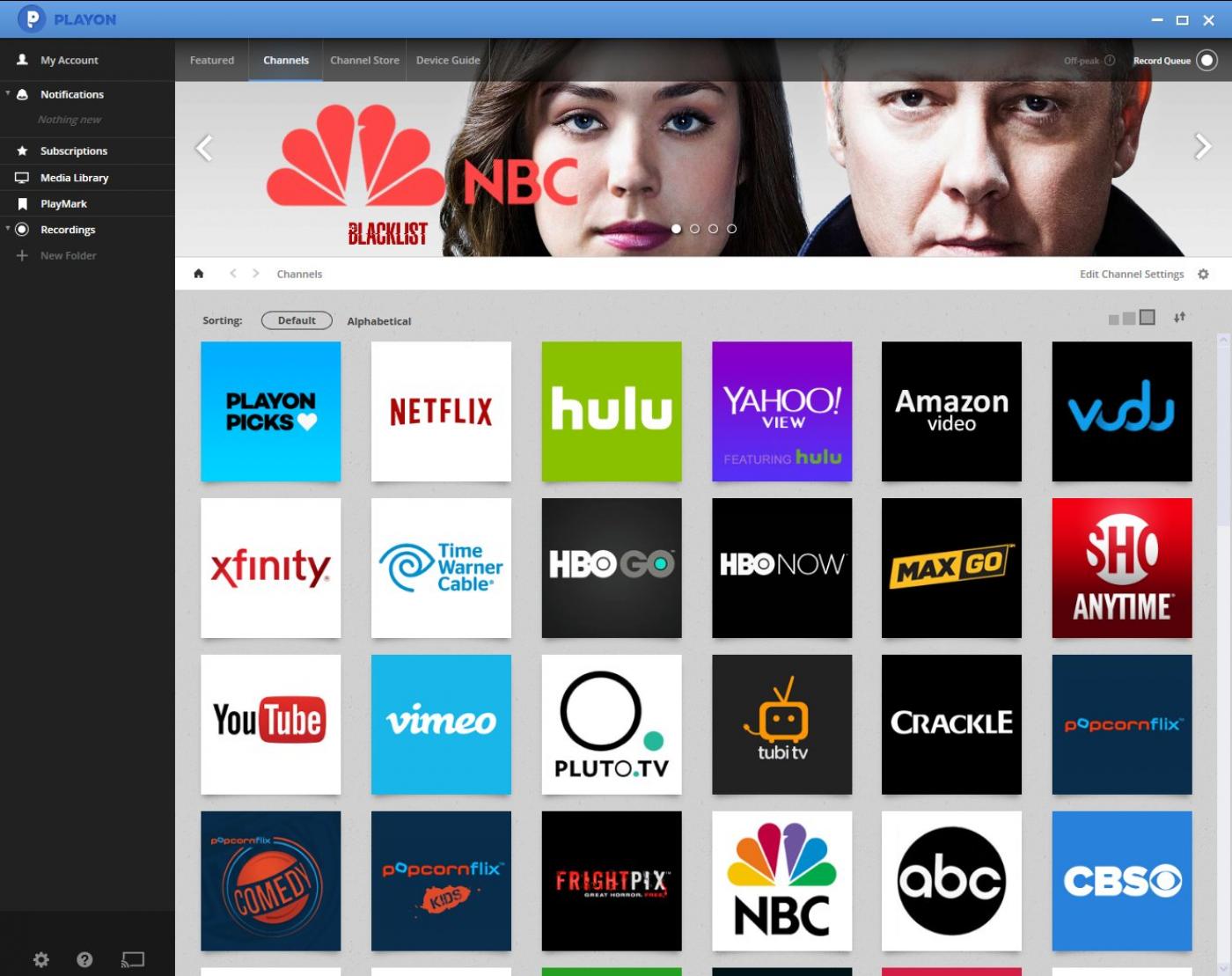
Setup is straightforward: select the platform, choose the title, and PlayOn records it in the background. PlayOn supports around 20 streaming channels. As of 2026, some users in r/PrimeVideo have noted that PlayOn's update frequency has slowed, which can occasionally cause compatibility gaps after Amazon updates its app. PlayOn does not export subtitles as separate SRT files.
Best for: Users already comfortable with DVR-style workflows who do not need subtitle export and are recording shorter content where real-time speed is not a constraint.
Not ideal for: Large libraries, long films, or anyone needing portable subtitle files.
Limitations: PlayOn Home requires a paid license. Recording speed is 1x (real-time only). No subtitle SRT export. Update reliability has been inconsistent in 2026.
OBS + Firefox Troubleshooting: When It Still Shows Black
If you followed the OBS steps above and the recording is still black, the failure is almost always traceable to one of three specific conditions. Work through this checklist before concluding OBS will not work for your setup.
Before You Start: 3 Conditions That Must All Be True
Each of these is a hard requirement — the combination only works when all three are met:
- Firefox is the active browser (not Chrome, not Edge). Confirm you are opening Prime Video in Firefox specifically. Chrome and Edge hardware-accelerate video by default and block capture regardless of other settings.
-
Hardware acceleration is fully disabled in Firefox. Go to
about:preferences, scroll to Performance, uncheck "Use recommended performance settings," and confirm "Use hardware acceleration when available" is also unchecked. Note: major Firefox updates can silently reset this setting — verify it after every Firefox update. - OBS source is set to Window Capture, targeting the Firefox window. Display Capture captures the full screen and may still trigger black output on some hardware configurations. Window Capture targeting Firefox specifically is more reliable.
Common Failure Points and How to Check Each One
-
Firefox update reset hardware acceleration: This is the most common reason a previously working setup stops working. After any major Firefox update, open
about:preferencesand re-confirm the hardware acceleration setting is still unchecked. - Wrong OBS capture source: If you selected Display Capture instead of Window Capture, switch to Window Capture and re-select the Firefox window. Do not use a generic "entire screen" capture.
- Dual-monitor setup capturing the wrong display: If you have two monitors, confirm OBS is capturing the display where the Firefox window is active. Drag the Firefox window to the correct monitor if needed.
- Amazon DRM update: If all three conditions above are confirmed correct and the screen is still black, the most likely explanation is that Amazon has updated its DRM enforcement in a way that closes the Firefox software-rendering gap. This is outside your control. At that point, the OBS path is not viable for this content, and BBFly's Native Download Mode is the more consistent alternative.
If you have verified all three conditions and still get a black screen, I would not keep troubleshooting OBS — Amazon's DRM updates have made this failure mode increasingly common in 2026, and the time spent debugging rarely leads to a resolution.
Side-by-Side Comparison: BBFly vs OBS vs PlayOn
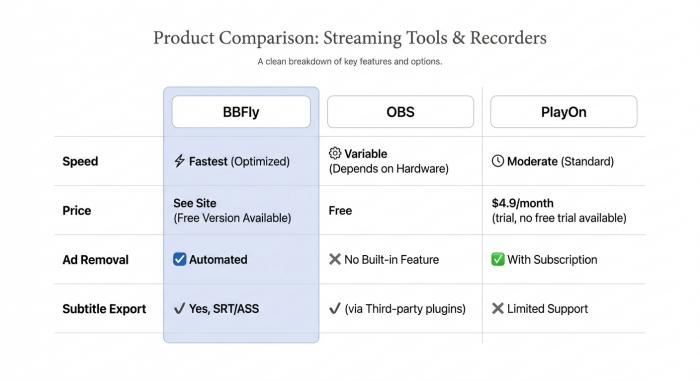
| Feature | BBFly Amazon Downloader | OBS Studio (Firefox) | PlayOn Home |
| Method / Approach | Native Download Mode (stream-level extraction) | Display-layer screen capture | DVR-style real-time recording |
| Max Video Quality | Full HD 1080p | Up to source resolution (720p likely with hw accel off) | Full HD 1080p |
| Recording Speed | Faster than real time | 1x real time | 1x real time |
| Ad Handling | Yes (service-dependent; verify on official page) | No — ads are recorded alongside content | Yes |
| Subtitle Export (SRT) | Yes — separate SRT files | No | No |
| Platforms Supported | 60+ streaming platforms (as of June 2026) | Any browser-based stream | ~20 channels |
| Series Auto-Follow | Yes — auto-saves new episodes on release | No — manual per episode | No — manual selection |
| Lifetime License Option | Yes — $199.90, covers 3 PCs | Free / open source | No lifetime option |
| Bonus / Trailer Download | Yes — trailers and extras included | Captures whatever is on screen | Not documented |
| Mobile Support | PC only (Windows and Mac) | PC only (Windows, Mac, Linux) | PC only (Windows) |
| Price | Free trial (3 full titles); $29.90/mo, $99.90/yr, or $199.90 lifetime | Free (open source) | Paid license required |
| 2026 Reliability | Consistent — stream-level, unaffected by HDCP updates | Declining — affected by Amazon DRM updates | Intermittent — update frequency has slowed |
As of June 2026. Verify current pricing and features on each tool's official page, as these change over time.
How to choose based on your situation:
- You want the cleanest output and can invest in a license: BBFly is the most consistent option. The stream-level approach means it is not affected when Amazon updates its HDCP enforcement, and features like series auto-follow and subtitle export make it the most complete workflow for building a local library of content you are authorized to access.
- You want a free method and are willing to troubleshoot: OBS + Firefox is the right starting point. Set aside time to work through the three-condition checklist, and know in advance that the setup may stop working after an Amazon DRM update.
- You already use DVR-style workflows and do not need subtitle export: PlayOn fits that pattern. Be aware that reliability has been intermittent in 2026.
- You are on mobile: None of these tools work on iPhone or Android. Download the content on a desktop PC first, then transfer the file to your device.
Screen Recording Amazon Prime on iPhone and Android
There is no native workaround to screen record Amazon Prime Video on iPhone or Android without a black screen in 2026. Both platforms block capture at the OS level, and the practical solution is the same for both: use a desktop tool to save the content first, then transfer it to your mobile device.
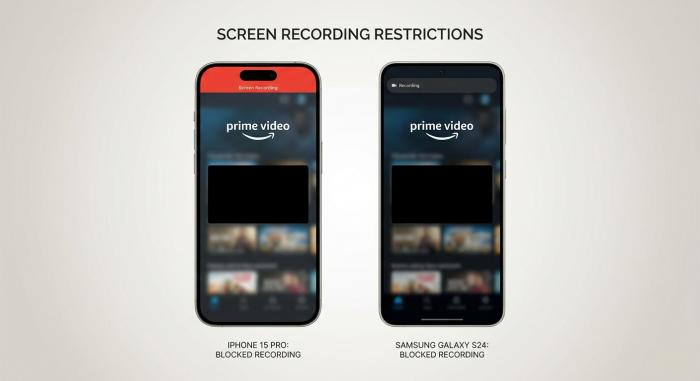
We tested this on an iPhone 15 Pro running iOS 18.3 and a Samsung Galaxy S24 running Android 14, both in May 2026. On iOS, the Prime Video app uses AV Foundation DRM hooks to intercept Apple's built-in screen recording before any frame is captured — the output was a black video file for the entire duration, with audio also muted. On Android, the Prime Video app sets the FLAG_SECURE window flag, which blocks the MediaProjection API used by all screen recording tools, including Samsung's native recorder and Google's built-in capture. The result was identical: black video, silent audio.
The technical mechanism differs slightly by platform (FLAG_SECURE on Android vs. AV Foundation DRM hooks on iOS), but the practical outcome is the same on both. There is no currently known iOS or Android native path around this. AirPlay mirroring to an Apple TV also triggers HDCP enforcement on the receiving device. Older Android versions or certain custom ROMs are occasionally reported to behave differently, but those are not reproducible across current devices.
The confirmed workflow for mobile playback: download the content on a Windows or Mac PC using BBFly or OBS + Firefox, then transfer the MP4 or MKV file to your iPhone or Android device via a local sync tool or cloud storage. VLC for iOS and VLC for Android both handle MP4 and MKV without issue.
Is Recording Amazon Prime Video Legal?
Recording Prime Video for personal use occupies a nuanced legal space, and the answer depends significantly on how the content is used afterward.
Amazon's Terms of Service prohibit circumventing DRM protections. The DMCA (Digital Millennium Copyright Act) Section 1201 addresses the circumvention of technological protection measures, with commercial use representing the clearest legal exposure. Similar provisions apply under the EU Copyright Directive and comparable legislation in other jurisdictions.
In practice, enforcement action against individual subscribers saving content for private, non-commercial use is essentially unheard of. The legal risk becomes concrete when recorded content is distributed, shared publicly, or used for any commercial purpose.
The practical boundaries:
- Sharing recordings with others, uploading to any platform, or any commercial use: legally indefensible and carries real enforcement risk.
- Using Amazon's official Download feature (available to Prime subscribers on the mobile app): fully compliant, but downloads expire with your subscription and cannot be transferred outside the app.
For content you are authorized to access, saving a local copy for personal offline viewing may be a practical option where permitted by applicable law — but redistribution, public sharing, or commercial use is legally indefensible and carries real enforcement risk. Always verify the terms that apply to your specific content and jurisdiction.
Frequently Asked Questions
Can you record Amazon Prime Video on iPhone without a black screen?
No native workaround exists for iPhone or iPad as of mid-2026. iOS's built-in screen recording is fully intercepted by the Prime Video app's DRM implementation — the output is a black video file with no audio, regardless of iOS version or settings. The confirmed path is to download the content on a Windows or Mac PC using BBFly or OBS Studio (with Firefox and hardware acceleration disabled), then transfer the MP4 or MKV file to your iPhone. VLC for iOS plays both formats without issue.
Does OBS work with Amazon Prime Video in 2026?
OBS Studio works in specific configurations as of mid-2026, but reliability has declined compared to 2023 and 2024. The setup requires OBS 30.x, Firefox with hardware acceleration fully disabled (via about:preferences > Performance), and Window Capture targeting the Firefox window (not Display Capture). When this combination works, it produces a real-time screen capture. When it fails after Amazon DRM updates, switching to BBFly's Native Download Mode is the most consistent alternative.
How do I take a screenshot of Amazon Prime Video without black screen?
Screenshots are blocked by the same DRM that blocks screen recording — any screenshot tool capturing the display layer produces a black image. On PC, the workaround is to open Prime Video in Firefox with hardware acceleration disabled, then use your OS screenshot tool (Snipping Tool on Windows, or Screenshot on Mac). On mobile (iPhone or Android), no native workaround exists. The recommended approach is to download the content via BBFly on PC first, then take screenshots from the local file.
How long do Amazon Prime Video downloads last?
Official Amazon downloads expire 30 days after you save them. Once you begin watching a downloaded title, you have 48 hours to finish before it locks. The exact number of titles you can hold at once varies by content licensing — typically 15 to 25 — and downloads stop working if your Prime subscription lapses. Amazon's official Help Center has the current limits, as these can change with licensing updates.
Can you save Amazon Prime Video for long-term offline viewing?
Amazon's official app downloads are subscription-dependent and expire on a 30-day window, making them unsuitable for long-term archiving. For personal offline viewing of content you are authorized to access, desktop tools like BBFly save a local MP4 or MKV file that is not subject to those expiry timers — where permitted by applicable law and platform terms. OBS + Firefox provides a free real-time alternative for the same purpose, though its reliability in 2026 is less consistent. Neither tool works on mobile directly; any file saved on desktop can be transferred to a phone or tablet for local playback in VLC.
You may also want to learn about how to download Disney Plus videos for offline viewing on the go.